
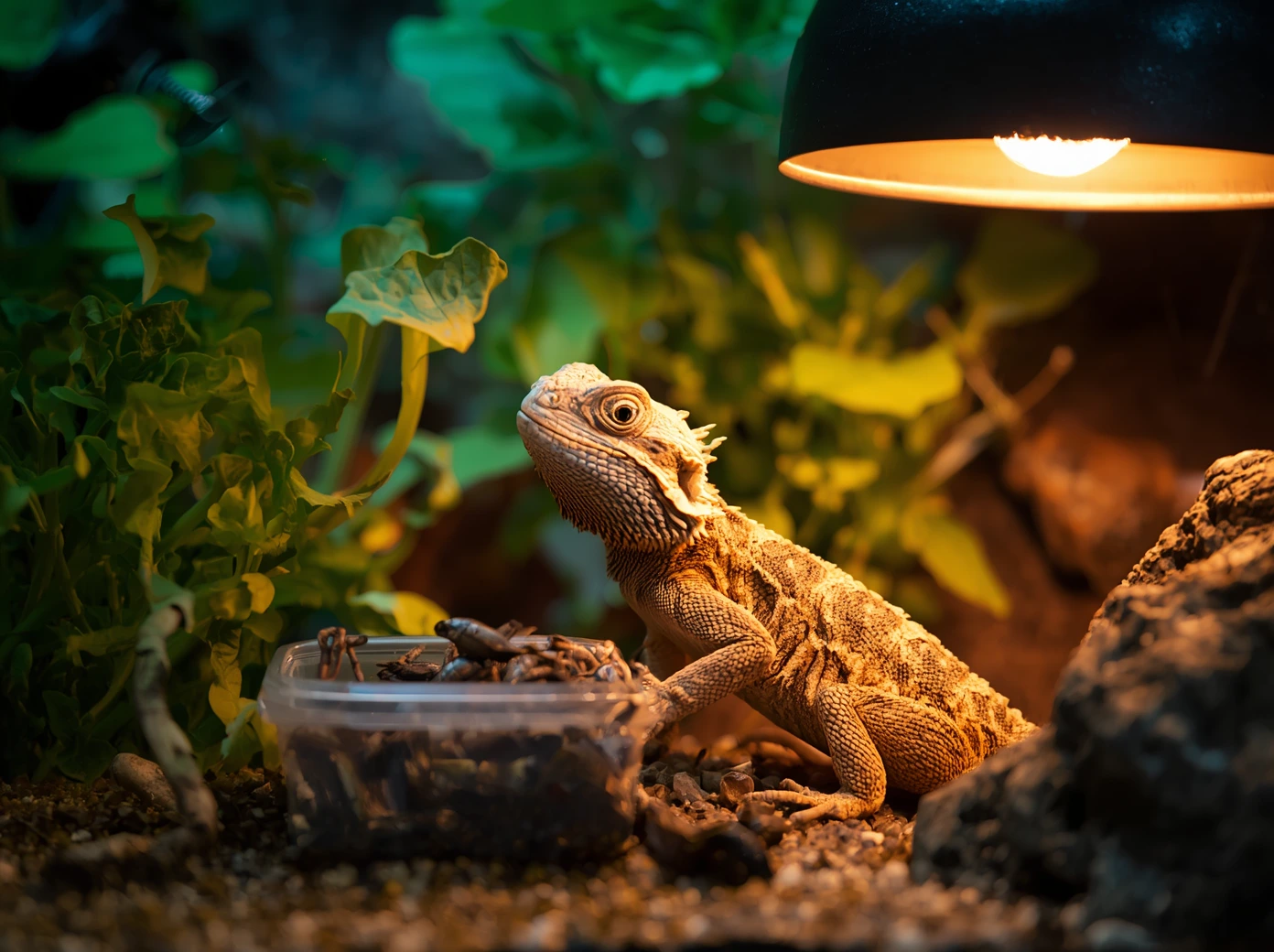
Quick Answer
A bearded dragon may cost roughly $50–$150+ per month after setup as a PetLifetimeCost planning range. Food—especially feeder insects for juveniles—is often one of the largest recurring costs. Owners should also budget for greens, supplements, electricity, UVB and heat equipment, cleaning supplies, and exotic veterinary care. The first year is usually more expensive because of the enclosure and lighting setup.
Bearded Dragon Monthly Cost at a Glance
The monthly cost of a bearded dragon varies more by age, feeder source, enclosure setup, electricity rate, and veterinary needs than by one national “average.” For planning, many owners may land around $50–$150+ per month after the enclosure is established.
Lower-cost adult months
More plant-based feeding, efficient equipment, home cleaning, and no medical issues can keep routine spending relatively low.
Typical planning months
Food, supplements, electricity, bulb replacement savings, cleaning supplies, and veterinary savings all contribute.
Juvenile or higher-need months
More feeder insects, equipment replacement, parasite treatment, illness, or emergency care can push spending well above the planning range.
What Costs the Most Each Month?
The largest recurring categories are usually food, electricity and equipment replacement, followed by veterinary or emergency planning.
| Expense | What Drives Cost | How to Budget |
|---|---|---|
| Feeder insects | Age, appetite, feeder type, bulk vs local purchase, and insect availability. | Track one month of actual feeder purchases. |
| Greens and vegetables | Adult diet, grocery prices, waste, and food variety. | Use your actual weekly produce cost. |
| Supplements | Calcium and multivitamin products and the schedule recommended for your dragon. | Average container cost over how long it lasts. |
| Electricity | Bulb wattage, hours per day, room temperature, climate, and local utility rate. | Calculate from wattage and your electricity price. |
| UVB and heat equipment | Fixture quality, lamp type, manufacturer replacement guidance, and unexpected bulb failure. | Set aside a small monthly equipment-replacement fund. |
| Cleaning and substrate | Enclosure style, substrate choice, disinfectants, liners, and cleaning frequency. | Use the safest setup for your husbandry plan, not simply the cheapest material. |
| Veterinary care | Exotic-vet access, wellness exams, fecal testing, illness, injury, and emergency care. | Price a local exotic-vet visit before bringing the dragon home. |
Food Cost: Juvenile vs Adult Bearded Dragons
Food is often one of the biggest recurring costs, especially for juveniles. Younger bearded dragons generally eat a larger proportion of insects while adults shift toward more plant matter.
VCA Animal Hospitals notes this age-related diet difference and emphasizes appropriate calcium supplementation and a varied diet. Read VCA’s bearded dragon feeding guidance.
Juveniles
Usually cost more to feed because live insects make up a larger part of the diet during growth.
Adults
Often cost less to feed because the diet shifts toward a greater proportion of greens and vegetables.
Actual food spending depends on feeder prices, shipping, whether insects are bought in bulk, produce waste, and the dragon’s appetite. Avoid relying on cheap dried insects or incomplete diets simply to reduce cost.
Heating, UVB and Electricity Costs
Proper heat and UVB are essential husbandry costs, not optional upgrades. Merck Veterinary Manual notes that UVB is especially important for diurnal reptiles such as bearded dragons because it supports vitamin D3 synthesis and calcium regulation. Read Merck’s reptile husbandry guidance.
How to estimate electricity
Monthly electricity cost ≈ combined equipment wattage × hours used per day × days per month ÷ 1,000 × your electricity rate per kWh.
This is more accurate than applying one national dollar estimate because utility rates, room temperature, bulb wattage, and runtime vary.
VCA also emphasizes that UVB output can decline before a lamp visibly fails. Replace UVB lamps according to manufacturer guidance or measured UV output rather than waiting for the bulb to burn out. Read VCA’s bearded dragon housing guidance.
Substrate and Cleaning Costs
Substrate cost depends on the enclosure setup, but safety and husbandry should drive the choice—not the lowest monthly price. Solid, paper-based, washable, or loose-substrate setups have different cleaning and husbandry considerations.
Disposable setup
Paper-based materials are inexpensive and make droppings easy to monitor, but they require ongoing replacement.
Reusable surfaces
Some solid or washable surfaces have a higher upfront cost but lower replacement spending.
Loose substrate
Can add ongoing material and cleaning costs and should only be used as part of an appropriate husbandry setup.
If you are unsure which substrate is appropriate for your dragon, enclosure, or health status, ask a reptile-experienced veterinarian rather than choosing solely by cost.
Supplements Are a Small but Essential Cost
Calcium and reptile multivitamin products are usually a relatively small recurring expense, but they should not be skipped to save money. Calcium balance depends on diet, UVB exposure, temperature, age, and the supplement schedule.
Follow reptile-veterinary guidance for frequency and product choice because both inadequate and inappropriate supplementation can cause problems.
Exotic Vet and Emergency Planning
Veterinary care is often the biggest surprise cost because not every general veterinary clinic treats reptiles. Before buying or adopting a bearded dragon, identify a reptile-experienced veterinarian and ask what a routine exam and common diagnostics cost locally.
Common veterinary needs to plan for
- Initial exam after purchase or adoption
- Wellness examinations
- Fecal parasite testing
- Parasite treatment when needed
- X-rays or other imaging
- Treatment for appetite loss, weakness, abnormal stool, respiratory signs, injury, or reproductive problems
- Emergency exotic-veterinary care
Do not delay care for a weak, non-eating, breathing-abnormally, or severely lethargic reptile just to reduce cost. Reptiles can hide illness until disease is advanced.
Bearded Dragon Insurance: Is It Available?
Exotic-pet insurance may be available from some insurers, but availability is much more limited than for dogs and cats. Do not assume one standard monthly price applies to every bearded dragon.
If insurance is available
Compare the actual premium, deductible, reimbursement rate, exclusions, waiting periods, annual limits, and whether reptile-specific conditions are covered.
If insurance is unavailable
Build dedicated savings for exotic-veterinary care and keep enough cash available for an urgent visit or diagnostic work.
Nationwide provides information about insurance for reptiles and other exotic pets, which shows that coverage can exist, but policy availability and terms should be verified directly. Review Nationwide’s exotic-pet insurance information.
For broader insurance decision-making, read Is Pet Insurance Worth It?.
First-Year Bearded Dragon Cost
The first year is usually the most expensive because you must buy or adopt the animal and establish a proper enclosure, UVB lighting, basking heat, temperature monitoring, decor, food, and veterinary plan.
| Expense | What Affects Cost |
|---|---|
| Bearded dragon | Adoption vs breeder, morph, age, and source. |
| Adult-size enclosure | Size, materials, ventilation, front-opening design, and whether you buy once or upgrade later. |
| UVB and basking setup | Fixture quality, lamp type, thermostat/control equipment, and monitoring tools. |
| Thermometers and monitoring | Digital thermometers, infrared temperature checks, and other safety equipment. |
| Hides, branches and basking surfaces | Enrichment quality, safe climbing surfaces, and enclosure layout. |
| Food and supplements | Juveniles may have much higher feeder-insect demand. |
| Initial veterinary care | Local exotic-vet pricing and whether fecal testing or treatment is needed. |
| Emergency savings | Your insurance situation, local exotic-vet access, and financial risk tolerance. |
Buying a very cheap starter kit can create false savings if the enclosure, UVB, fixtures, or monitoring equipment need to be replaced soon after.
Juvenile vs Adult Bearded Dragon Cost
| Life Stage | Typical Cost Pattern | Why |
|---|---|---|
| Baby or juvenile | Often higher | Greater feeder-insect demand, rapid growth, and possible setup upgrades. |
| Healthy adult | Often more predictable | More plant matter, fewer insects, and a stable enclosure setup. |
| Medical-needs dragon | Can rise substantially | Veterinary visits, diagnostics, medication, special feeding, or supportive care. |
How to Lower Bearded Dragon Costs Safely
Save on sourcing and waste—not on essential husbandry.
- Buy feeder insects in bulk from a reliable source when storage and local regulations allow.
- Reduce feeder waste by storing and caring for live insects correctly.
- Use affordable staple greens that are safe and available locally.
- Buy the correct enclosure once rather than repeatedly upgrading undersized setups.
- Use appropriate UVB and heat equipment instead of replacing unsuitable products later.
- Track UVB replacement dates and follow manufacturer guidance.
- Find an exotic vet before an emergency so you already know where to go.
- Build emergency savings even when your dragon appears healthy.
If the monthly cost feels uncomfortable, use the Pet Affordability Quiz before bringing a bearded dragon home.
Plan Your Reptile Budget
A bearded dragon can be a rewarding pet, but proper heating, UVB, nutrition, enclosure space, and exotic veterinary care are core costs—not optional extras.
Compare Other Small Pets
See Rabbit Cost Per Month, Cat Cost Per Month, and Dog Cost Per Month.
Check Affordability
Use the Pet Affordability Quiz to test your monthly budget and emergency readiness.
Compare Insurance
Read Is Pet Insurance Worth It? before relying on a policy instead of savings.
Budget More Carefully
Use How to Budget for a Pet to turn irregular costs into monthly sinking funds.
Bottom Line
A bearded dragon may cost roughly $50–$150+ per month after setup as a planning range, but the number can move substantially with age, feeder prices, electricity, equipment, and veterinary needs. The animal itself may be inexpensive; responsible ownership is not. Budget for proper UVB, heat, nutrition, enclosure equipment, and exotic-veterinary care before purchase.
Sources and Cost Methodology
The dollar figure in this guide is a PetLifetimeCost planning range, not a published U.S. national average. Detailed costs vary by age, feeder source, electricity rate, enclosure setup, location, exotic-vet access, equipment quality, and health. Veterinary and husbandry claims are grounded in current reptile-care guidance rather than cost-blog estimates.
- VCA Animal Hospitals — Bearded Dragon Feeding
- VCA Animal Hospitals — Bearded Dragon Housing
- Merck Veterinary Manual — Management and Husbandry of Reptiles
- Nationwide — Exotic Pet Insurance Information
Methodology review: Cost examples were checked for consistency with the planning assumptions shown in the article. This content is informational and is not veterinary, financial, legal, or insurance advice.
Last updated: August 27, 2026. Feeder prices, electricity costs, equipment prices, insurance availability, and exotic-veterinary costs should be checked against current local providers.